Tag Archives: Writing

BELOW “THE NECK”

Boss cartoonExcerpt from my book, “Bosses and Blackjacks: A Tale of the Bloody Fifth in Philadelphia.”  http://tinyurl.com/zbtz6an

1907—A glimpse at some of the bosses…


The Vare brothers—George, Edwin, and William—were dominant figures in the city of Philadelphia. With their start as sons of a South Philadelphia pig farmer, they all got involved in contracting with the city and had their hands in local politics from a young age. George, a produce huckster, drew his brothers into rubbish, garbage, and street-cleaning contracts. Called “slopcart salesmen,” they dumped the collected garbage along the Delaware River.

George Vare got elected to the State Senate, where he played a considerable role in making Boise Penrose (“the big grizzly” as he was known by his admirers) an important figure by the time Thomas Smith arrived in Harrisburg.

William S. Vare was the current recorder of deeds, having been re-elected in 1904 and now again in 1907. In this position, he had influence in the surety business of the city. It was Bill who arranged this meeting for brother Ed with Tom Smith.

All strong Republicans, they had deep roots in the densely populated area of Philadelphia below South Street and all the way down to “the neck”—home of the Philadelphia Naval Yard.


The more things change…the more they stay the same. Sad, but true.

Save

Save

MIND GAMES

Ever wonder why many old people get along so well with little kids? I think I’ve found the answer!

Young brains are constantly absorbing everything in the world around them for the first time. Old brains have stored so much they get to the point where they have to release some of what they’ve accumulated, or their heads will explode.

The logical thing for the elderly to do is hang out with little kids and shower their tiny brains with old people’s excess creativity. Problem solved.

“Psychology Today” in 2009, provided this more scientific blurb, for those of you who like sciencey-type explanations…

“Finally, intelligence studies indicate that older individuals have access to an increasing store of knowledge gained over a lifetime of learning and experience. Combining bits of knowledge into novel and original ideas is what the creative brain is all about. Thus, having access to increased internal warehouse of knowledge provides fertile ground for creative activity in the aging brain.

Many seniors are already making a mark for themselves in creative fields. Consider Millard Kaufman, who wrote his first novel, the hit book Bowl of Cherries, at age 90. Then there’s 93-year-old Lorna Page, who caused waves in Britain with her first novel A Dangerous Weakness. Following in the footsteps of Grandma Moses (who did not take up painting until in her 70’s), former patent attorney John Root Hopkins turned to art in his 70’s and had a showing of his work in the American Visionary Art Museum at age 73. There are numerous examples throughout history of the creative power of the aging brain: Benjamin Franklin invented the bifocal lens at the age of 78, Thomas Hardy published a book of lyric poetry at age 85, Frank Lloyd Wright completed the design of the Guggenheim Museum in New York at and 92, and Giuseppe Verdi wrote Falstaff, perhaps his most acclaimed opera, at the age of 85.”

This explains, quite clearly, why I wrote my first book and started this blog at the age of 152!


TAKE ME OUT TO THE BALL GAME!

Baseball season is upon us!

To celebrate this “National Pastime” I’ve decided to share an excerpt from my book—

“Bosses and Blackjacks: A Tale of the ‘Bloody Fifth’ in Philadelphia.” http://tinyurl.com/j4qbpsz

(From Chapter Twenty – 1916)

Out in the crisp air of the sixteenth of April, after leaving the station early that afternoon, Dave forgot the morning’s row and felt a bit like his old self. He began to whistle “It’s a Long, Long Way to Tipperary” as he waited for Howard and Johnny on the corner outside of Baker Bowl, the ballpark on Huntingdon Avenue.

“How’re ya doin’ Davey,” Johnny greeted him with his usual enthusiasm. “Damn, look at this crowd. They’re even up on the roofs! Lucky for us you got them tickets. Where’s Howard? Not here yet?”

“No, but I hope he gets here soon. The owners are going to give presents to the players for winning the pennant last year, and I don’t want to miss it,” Dave said.

He spotted Howard trying his best to rush through the crowd.

“Here he comes, Johnny. Over here, Howard!”

Howard spotted Dave, and waved back with both arms.

“Shit…I forgot how bad that limp of his is,” Johnny said. “Come to think of it, I don’t remember the last time I saw him.”

Howard’s broad face shone with anticipation and perspiration when he met up with them.

“Hello, Johnny! How’re you doing, Dave?”

They joined the large throng entering the ball field.

As they took their seats, the announcer on the field started naming the players as they entered, each one to louder and louder cheers. Grover Cleveland Alexander, the Phillies’ star pitcher, appeared last. Dave and his two friends joined the other rooters as they stood to give the pitcher his well-deserved ovation.

Everyone sat down again, anticipating the start of the formal ceremony. The owners presented each of the Pennant-winning players of 1915 with a monogrammed gold watch. At the end, the crowd stood again and cheered.

To start the opening game of the season, Mayor Thomas B. Smith threw out the first ball, which got picked up by the catcher who tossed it to Alexander. The Phillies’ twenty-nine-year-old right-handed pitcher’s uniform hung like a potato sack on his slim six-foot-one-inch frame and his cap looked like it belonged to a child, but he didn’t take notice. He curled into his windup and let fly.

“Can’t they afford to get their players uniforms that fit?” asked Howard. “He looks like hell!”
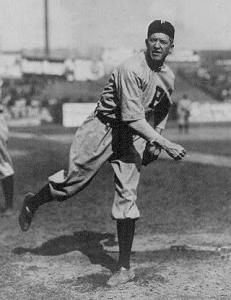
Grover_Cleveland_Alexander

Grover Cleveland Alexander, Phillies star pitcher, 1916 “Old Low and Away”

“Who gives a shit how he looks as long as he beats the Giants?” Johnny replied.

About that time, a beer hawker came through the bleachers to where the friends were seated.

“Over here—three!” Dave called.

As he passed the beers to the other two, he said, “Beating these bums’ll be no problem—they were dead last, last season.”

In the first inning, however, the “bums” made a game of it thanks to a wild throw by the normally steady shortstop, Dave “Beauty” Bancroft, which allowed two Giants to score.

“Son of a bitch! What the hell are ya doin’?” Johnny yelled.

“Take it easy. Here, have some peanuts.”

“I’d like some more.” Howard reached into the sack Dave held, and grabbed a handful. He brushed peanut shell fibers from the front of his shirt. “Wish this damn wind would settle down. I think it’s throwing their game off.”

“It ain’t the wind—they just stink,” Johnny replied.

The Phillies answered with one run in the first, and two in the second. Johnny calmed down.

The Giants managed another run in the third inning. Johnny and Howard both cursed.

In the fifth inning, Dave worried Johnny would have a heart attack. Alexander tossed a rare hanging curve to Fred “Bonehead” Merkle, who smashed it 272 feet over the right field wall.

Johnny’s face turned purple. Howard held his head between his hands and moaned. Dave ordered three more beers and some more peanuts from the hawkers.

The sixth inning saw both teams score, bringing them to a tie at four each.

By the ninth inning, the tension became so great the three friends were not talking. They were leaning forward on their elbows with their beers gripped tight.

Then it happened. Ninth inning, Phillies up, with two outs. Stock, the third sacker, grabbed a free pass, stole second, and scored after a passed ball and a wild pitch. Final score: Phillies—5–4.

It all happened in a flash. Johnny and Howard and Dave stood in place in shock, along with about 21,000 other rooters. Then, as if on cue, they all began to cheer and laugh and hug and spill beer over each other.

“Damn, Davey…that was the best baseball game I ever seen!” Johnny said. “Thanks a lot for bringin’ me along.”

“Yeah, Dave. That was great!”

“Nothing like a ballgame with your buddies,” Dave said. “Let’s get the hell outta here. I’m starved.”


WHY I HATE UNICORNS!

When the kids were young, they depended on me for everything. Food, clothing, shelter, changing the channel on the TV…you know—all the important stuff. I even bathed them when they were dirty! I was a good mom.

Through the years, I taught them how to sing, read, do all kinds of crafty things on rainy days. The crafty lessons were mainly to help me keep my sanity while they were stuck indoors.

They would fall down. Get scrapes and bruises. Push each other down. Get more scrapes and bruises. The crying and screaming sometimes became as irritating as nails skimming a blackboard. But, they were mine and I loved them, so I’d hug them, kiss them, patch them up, and tell them not to hit, bite, or kick the perpetrator in retaliation. Some times that worked.

During those early days, home desk-top computers came into fashion and affordability. Naturally, only the adults were allowed to touch the keyboard. After all, kids didn’t understand “if then/goto” and all the very complicated jargon of that early behemoth that required its own special room in the house. God forbid anything spilled within ten feet of that fifty-ton monster.

As the mom, I was permitted to play “games” on the computer. At the time, my game of choice (my only choice) was a text-based game called, “Zork.”

The only clear memory I have of suffering through that adventure game was the phrase, “The Unicorn is a mythical beast!”

That phrase glared at me in annoying white letters on that beast of a black screen more times than I could count. I recall it was in response to my trying to remove the key hanging around the Unicorn’s neck so I could open the next door…or some such thing.

In my frustration, the word choices that exploded from my brain to my mouth could only be spoken out loud after the little darlings were fast asleep!

Special Note: For those today who believe Facebook is a time-suck machine—you obviously never played “Zork!”

After hours and hours of hunching over the keyboard, tapping various instructions to the gremlins everyone knew lived inside the monster (and who obviously took great pleasure in making me crazy), I would trudge up the stairs to bed, bleary-eyed and grumbling to myself about how I would kill that Unicorn some day!

The next morning, my adorable, loving children would stare at me, frightened,  as they sat down to eat their breakfast of scrambled eggs and jelly beans.

Ah, technology!


PLEASE SHARE YOUR EARLIEST MEMORIES OF HOW MODERN TECHNOLOGY AFFECTED YOUR LIFE . . . INQUIRING MINDS WANT TO KNOW!

NO RETREAT … NO SURRENDER!

I WON A “MAJOR AWARD!”  (Think: A Christmas Story – leg lamp) — back in December, 2015.

It turned out to be a legitimate random drawing for three nights and four days at “When Words Count Retreat” in Rochester, Vermont, for myself and a guest. My husband  and I checked in last Thursday!

We had no idea what to expect.

We became a bit concerned after traveling the last mile of our journey from southern New Jersey on a gravel-covered, narrow, backwoods road, and joked about “The Blair Witch Project”—(thanking God it was daytime).

Blair Witch image

 BUT, WE WERE PLEASANTLY SURPRISED (and relieved)  WHEN 

…we pulled into the drive of a lovely white farmhouse sporting a welcoming red door.IMG_2395

Behind that door was a total writer’s paradise. In between the fabulous gourmet meals (breakfast, lunch and dinner—and the cocktails, of course!) there was uninterrupted writing time! A concept completely foreign to me, until last week.

In the evenings, guests read portions of their current work, and the rest (including our host, Steve Eisner) critiqued what was read, in a professional, caring, and encouraging way.

With the food, the new friends we made, the spectacular mountain views, and crystal clear air,  we felt completely pampered.

If you ever get the chance to go—do it!

SURRENDER to this, or some other RETREAT!

Your “Work in Progress” (and your soul) will be glad you did!

Have you ever attended a “writer’s retreat?” If you have, please share your experience (good or bad) in the “Comments.”

I’d love to hear your stories!


LET’S BE HONEST, FOLKS!

I have a question for you.

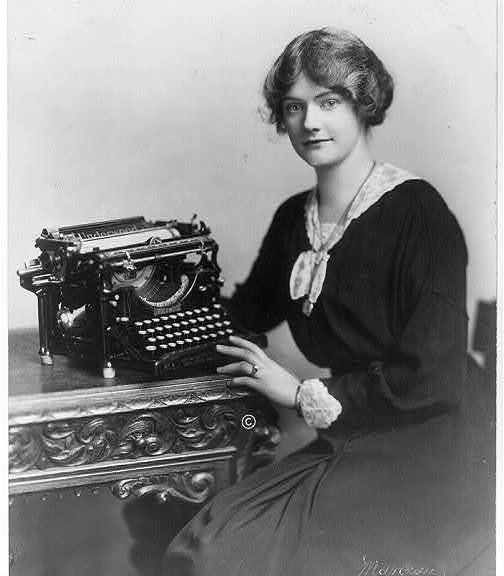
Why do writers (in this day and age) use pictures of old typewriters, pencils, pens, close-ups of typewriter keys, copybooks, lined tablets, et al as their website’s header image?

We all know that none of their blogs are produced using those arcane tools.

I mean, sure, some may begin by writing out their thoughts on paper with a wooden stick or ink-filled implement. But, c’mon—none of us would be able to access and read any of their brilliant posts, if that is where their efforts ended.

For instance—that is not me at the top of this page, and I did not use a typewriter from 1918 to accomplish this post. So, why do you suppose people think the only way to let their readers know that they are writers, is by reaching back into history for their photos?

I think I know the answer.

There is no romance, or mystery, or nostalgia in viewing a computer screen.  Perhaps in one hundred years, there may be. But not now. Not yet.

To prove my point, dear readers, I leave you with this antique version of the “backspace key”—reminisce with me for a moment:

pencil-eraser

See what I mean?

ALL ABOARD!

So—A young Jewish girl from Philly walks into a bar…(You haven’t heard this one, have you?)


Actually, it is the year 1888, and the bar is the Gem Saloon in Deadwood, South Dakota.

I’m about 4,500 words into writing my next book (an adult historical novel loosely based on true events) and I hope you will come along for the ride!


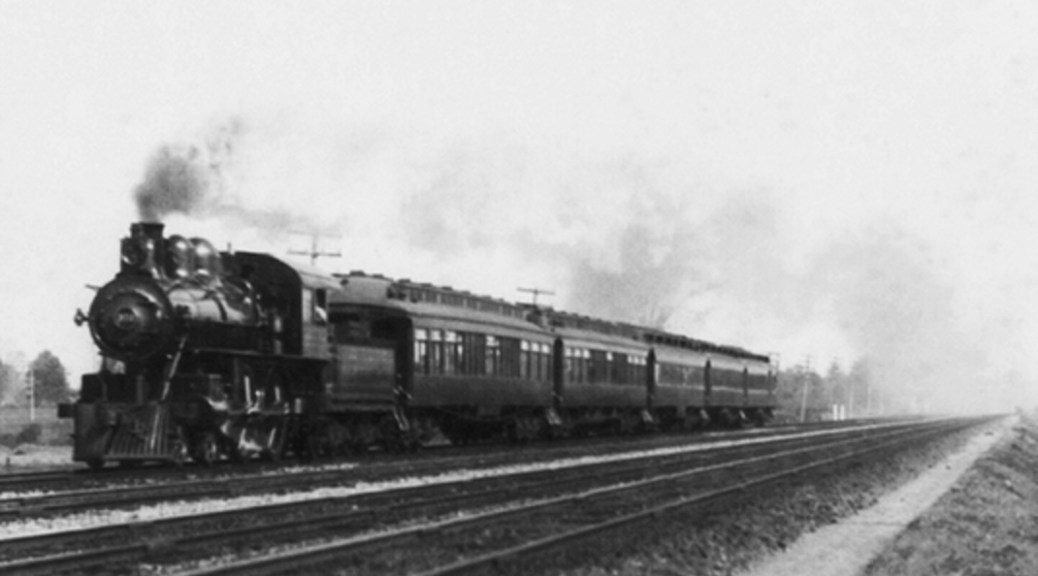
At the moment, our seventeen-year-old protagonist is on a train, headed for Chicago. An attractive thirty-something stranger has insinuated himself into her adventure by taking the seat next to her. Away from home and family for the first time in her life, Mae is both wary and excited!


I hope you will find the time, dear readers, to follow along for periodic updates on: “MAE heads WEST” — (my working title).


(NOTE: If any of my readers are, or know experts in early modes of transportation in the U.S., I would love to hear from you in the COMMENTS. I have several questions that my internet research has not provided answers to, and would appreciate your valuable assistance going forward.)


WHO AM I? . . . WHY AM I HERE? . . . AND HOW DID I GET HERE?

Einstein quote about explaining

In writing, we are always told to SHOW not TELL—but sometimes, we do need to do a bit of explaining so we don’t leave our readers floundering.

Reader to himself: “I had no idea Frances was Genevieve’s second cousin, once removed, and lived at the top of the hill just behind the shuttered mansion! That information would have come in handy when she was stabbed with the knife bearing the family crest!”

No one likes to be kept in the dark indefinitely, and so I thought it helpful to provide you, dear reader, with the following insight:

What Causes Under-Explaining?

Under-explaining can happen for one of two reasons:

1. The author doesn’t know his story well enough.

If you’re writing about a character, setting, or activity that you really don’t know that well, you may fail to fill in important blanks simply because you lack the info yourself.

2. The author knows his story too well.

At the other end of the spectrum, we have the problem of our own rampant imaginations running away with us. We see our characters, settings, and situations so clearly in our own minds that we forget readers aren’t sharing that vision. You may know your hero is blond, 6’1”, and about twenty pounds overweight, but that doesn’t mean that information will be automatically brain-waved to your readers.

K.M. Weiland , November 3, 2013

http://www.helpingwritersbecomeauthors.com

*******TRUST YOUR GUT!*******

Excerpt from PhillyVoice

Lightbulb Bridge
Light bulb acts as bridge across metaphorical cliffs.
March 12, 2016
Drexel study: Insight yields better solutions than analytical approach

DOES THIS CONFIRM THE ADAGE FROM THE 60’s—”IF IT FEELS GOOD, DO IT?”

When researchers from Drexel University, Northwestern University, the University of Wisconsin-Parkside, and Italy’s Milano Bicocca University conducted a series of puzzle experiments that tested the effectiveness of eureka thinking compared to methodical analysis, they found that responses derived from insight overwhelmingly led to more correct answers than those that came from more involved thought processes.

“Conscious, analytic thinking can sometimes be rushed or sloppy, leading to mistakes while solving a problem,” said John Kounios, director of Drexel’s Ph.D. program in Applied Cognitive and Brain Sciences. “However, INSIGHT IS UNCONSCIOUS AND AUTOMATIC — it can’t be rushed.

When the process runs to completion in its own time and all the dots are connected unconsciously, the solution pops into awareness as an Aha! moment.

Ah ha moment

This means that when a really creative, breakthrough idea is needed, it’s often best to wait for the insight rather than settling for an idea that resulted from analytical thinking.”